Wednesday, March 19, 2014

Shoebox App for Ancestry.com

LOVE THIS APP!!!

Let me start by saying I'm not a big fan of frivolous apps.  Who needs one more toy? Not me!

When I heard about the newer Shoebox app for ancestry.com I was, as always, hesitant to try it.  Well, trying is believing What was I waiting for?  Why didn't I know about this sooner?  and Yes!  Finally a useful app that makes my genealogy life soooo much easier.

If you haven't tried it or aren't sure what I'm raving about here it goes.  

The Shoebox app allows you to take a photograph of an object and crop, title and describe, set a location, and tag or tie it to someone in your family tree.  Big deal you say? Well hold on, once you've done all of the aforementioned things to the object and then save it.  The image is immediately uploaded to that persons profile page in your tree.  From there you can set the image as the primary photo for the person it's attached to.  Forget something or want to edit the description after it's uploaded? You can do that too.

How quick is this app?

I recently spent about 2 hours on a Sunday afternoon uploading documents and photos.  I was amazed when I realized that I had uploaded about 70 images in that time frame.  I am now addicted!  I would upload and then check to see if the photo was there and how I wanted to set the image (primary photo or not.)  It worked beautifully every time. And now I have photos for many more of my ancestors that can also be seen by others who are searching.  If others are seeing the images, they're making connections to me and my tree is continuing to grow.

What's next?

The findagrave app.  It's now available for apple, but I'm awaiting the android version.  With this app cemetery visitors should be able to snap a photo of a grave site and immediately upload it to findagrave.com with the GPS coordinates.  Imagine taking a detour some Sunday afternoon into a cemetery you have been meaning to visit.  The cemetery turns out to be enormously overwhelming and no one is available to help you locate a grave.  Fortunately for you, another visitor has already uploaded the gravestone/grave site locations to findagrave.com and all you have to do is access the website and navigate to the location in order to find success. When I'm in a cemetery I always try to take a few extra pictures in order to post them for others.  This app will make documenting an entire cemetery very doable in a short period of time.  I can't wait to get started!


Monday, March 17, 2014

Is Everyone Irish on St. Patty's Day?

I'm not sure about that, but I know I'm Irish everyday!

I thought on this St. Patty's Day I'd pay tribute to those Irish ancestors who left the only home and family they knew, braved the voyage across the Atlantic Ocean, and landed on the soil of the place that was supposed to bring a new beginning and better life.  America is the place where anything is possible.....

Unfortunately for me, I don't have any first hand family accounts of what it was like for my Irish ancestors to make their journeys onto American soil, but we can learn a bit of the harsh reality from the account of one Irish immigrant, William Smith.  Smith's story* was published in 1850, a few short years after he sails from Liverpool, England to New York as many of the Irish did in those days. His anxiety-filled account spans only 29 pages in length, but the glimpse he recounts of his heart wrenching tale of immigration makes me proud to descend from a people with such a strong will to succeed.

Smith's tale begins as he sets sail on "Friday, November 26, 1847, leaving behind his wife and child, an aged father, three affectionate sisters, and a few very close friends."  Smith wants for a better life writing, "For several years I had vainly endeavored to raise myself from the state of poverty and the constant degradation which the small remuneration I received for my labors forced me into.  If, in the free and happy land to which I was going, my last and only hope should be destroyed, my wife and child would suffer by my absence."

The horror of battling raging seas is in part recounted on the following two pages from the book.

William Smith, “An Emigrant’s Narrative; or a Voice from the Steerage,” page 7

 William Smith, “An Emigrant’s Narrative; or a Voice from the Steerage,” page 8

Ships Fever

Ragging seas are not the only dangers Smith encounters during his journey.  He tells the gruesome tale of immigrants dying horrible deaths after contracting ship's fever.  The illness, all to often, resulted in the death of passengers including the captain of the India, the ship they were sailing on.  Smith tells of how the bodies are buried at sea.

William Smith, “An Emigrant’s Narrative; or a Voice from the Steerage,” page 12

Dysentery

Following the scores of passengers contracting and dying from Ship's Fever, many survivors come down with dysentery.  Smith himself becomes ill from both sicknesses.  Upon the belief he is succumbing to the fever, Smith locates the only other passenger from his home town.  Smith asks the man to contact his wife on the occasion of his death and to pass on his few belongings and a message.  Fortunately for Smith, there is no need for anyone to deliver such a horrid announcement.  Miraculously,  Smith survives.  

Deplorable hospital treatment

Eight weeks after England's shore disappeared out of sight, Smith and the surviving passengers and crew of the India step foot on American soil.  Smith was told he would be taken to the Staten Island Hospital to receive treatment and regain his health.  The statement was partially true.  Smith went to the hospital, but the treatment he received was far from caring and restorative.  He tells of the freezing conditions, after all this was winter in New York.  Immigrant patients were punished if they attempted to warm themselves by a fire. He says the treatment he received was brutalizing and the bedding felt like laying on straw. Two weeks after being admitted, Smith was strong enough to be released from the hospital. With only a few shillings in his pocket (enough money to last a week,) he set out in New York City to make his way in his new "free and happy country."

The new world is not so welcoming

I can not even imagine trying to make your way in a place where you know no one, have very little money, and have no where to stay.  But some how Smith was able to come across people who were willing to help him.  Some of the people he came across in the first days of his new life had an understandable fear of anyone who had ship's fever. Another lesson of discrimination Smith has to learn.  People did not seem to care that it had been weeks since Smith was ill, but his appearance must have given it away.  Regardless of the initial fear of Smith's previous illness he manages to come in contact with a man who will eventually give him shelter, a hearty meal, and the aid he needs to begin work.

Those left behind

After ten weeks from England's shore Smith is able to write his wife and relate the tale of stormy seas, illness and death, deplorable hospital treatment and his new life.  Smith is unaware when he writes his letter that the man whom he asked to contact his wife upon his death had assumed he had most likely died in the hospital. The fellow shipmate relayed a message to his own wife in Ireland and soon word spread of Smith's untimely death.  So you can image that upon receiving the letter from America, Smith's wife can't bear to bring herself to read it.  She then passes the letter onto Smith's father who has the honor or breaking the letter's seal and reading Smith's ghostly words aloud to the family.  The message of life Smith had sent back to his family in Ireland must have been some of the most beautiful words his family had ever heard.

In honor of William Smith and all of our Irish immigrant ancestors, I would like to say thank you. I think of all of you often, and admire your fighting spirit.


Here's to our Irish immigrants and their families: 
the Carsons, the Whites, the Hannas, the Byrnes
the Conleys, the Reilys, the Greens, the McArdles, the Rileys, and the Millers


*William Smith, “An Emigrant’s Narrative; or a Voice from the Steerage, published by the author 1850.

Tuesday, March 4, 2014

How About Those Skeletons?

Unearthing Skeletons

Unearthing those skeletons is always interesting whether they are my own or those belonging to a client.  Aren't those skeleton's stories what make our family history come alive?  OK, maybe you disagree.  They tend to shake up our tree, make us ponder where did we really come from, and occasionally scare us. Well then, what should we do with those skeletons? Leave them buried? Pretend we never uncovered their secrets? Well, maybe we should celebrate them, OK maybe not the mass murderers, but those who just choose the wrong road when coming to the fork in it.

Recently, I was listening to (I believe) one of Lisa Louise Cooke's* podcasts where she addressed this issue. The advice offered by Lisa Louise was.....the living come first.  I'd have to agree.  Maybe after digging up juicy information about your long-lost-gun-slinging-bank-robbing-womanizing great-great uncle once removed, and knowing full well that Grandma would cringe at the thought of airing dirty laundry, it may not be sage advice to immediately run to the nearest computer to post this information for all to see.  Or if you find yourself immediately compelled to share, as we are all too ready to do in today's world -  leave out a few gory details for Grandma's sake.  We all want Grandma to be happy in her last years don't we? Of course we do!  Well then, how do we present this new found information without making Grandma want to write us out of her will?

How about trying this........

substituting desperado for bank robber - conjures up imagery of the famous Eagles song
substituting moonlighter for thief - no one will suspect the subject is not working a second job
substituting groggy for someone who drinks a little too much - indicates someone is very tired, maybe from working hard

OK you get the idea - there are many ways to gently discuss the habits of our skeletons without putting it all out there.  However, keep in mind when deciding whether you should post, discuss, or relay any questionable information ere on the side of caution.  Perhaps you can ask another friend or family member who wouldn't be greatly effected by the new information.  This accomplishes too things. One, allows you to relate your information and two, use the person as a sounding board to gauge their reaction and gain their opinion.

The choices we make can go along way......

A few years ago someone kindly offered to go to a library local to her to look up an obituary for me.  She was able to find the obituary and a story to go along with the obituary.  The reason for the story was that my third great grandfather had been killed after being hit by a train while walking along the railroad tracks.  He was 82 years old.  The woman did not tell me this information because she realized that it may upset me. Instead she sent me the paperwork and allowed me to read it for myself. After discovering this information she had a choice to make.  She could have emailed me immediately with all the gory details and risked upsetting me or she could have done the correct thing which was to gently allow me to discover the reason why my third great grandfather had passed.  I appreciated her thoughtfulness.  Just because we find information does not mean others will be as excited to know every last detail.

Embrace you skeletons....

Sometimes they're embarrassing, silly, uneducated, crazy, controversial, far-from-traditional, or down right nasty, but they are ours.  We did not create them and we are not responsible for them. So why should we feel they are a reflection on us?  Try to find some good in those skeletons and embrace them.  We would not be here if it weren't for them.

(*Lisa Louise Cooke's genealogy gems website is lisalouisecooke.com)

Sunday, February 9, 2014

Do you flipboard for genealogy???

One android app I have become attached to is my Flipboard app.  

If you're not familiar with flipboard. www.flipboard.com describes it as
 "a single place to discover, collect and share the news you care about.  Add your favorite social networks, publications and blogs to stay connected to the topics and people closest to you." 

I'm not a big fan of apps and don't have a lot of time to "play" with new technology, but this app is definitely for me and anyone who enjoys reading and learning about new sources of information.  I feel much more connected to the genealogy profession by reading the genealogy articles on my flipboard.  And this one is sooooo easy and useful.

Just choose the types of "magazine articles" you'd like to read about and flipboard pretty much does the rest.  After taking a few minutes to set it up you're ready to flip through the pages and pages and pages (you get the idea) of articles under your chosen topic.  My favorite time to use my flipboard app is on the weekends, in the morning when I'm still waking up.  I can image many times and places when accessing flipboard would be advantageous such as anytime you're wanting to read.  

I love flipboard for introducing me to many different genealogy avenues such as the many genealogy articles on about.com written by professional genealogist, Kimberly Powell,  and Eastman's Online Genealogy Newsletter written by Dick Eastman, a wonderful blog written by Eastman and full of everything genealogy and then there are the many articles with links to genealogy videos on youtube.  I'm convinced you can sit all day following link after link in these articles.  

So, the next time you're sitting around waiting for the doctor, DMV, or airplane, open up your flipboard app and learn something new.

Wednesday, January 29, 2014

Overwhelmed? To Say the Least!

I always find it calming and reassuring when I'm feeling overwhelmed or out of control to make a list or design a plan.  Boy, do I need a plan now.  I started reading the Professional Genealogist or more loving known as Progen.  It is basically a textbook with all 654 pages exploding with essential genealogical information.  Being a reference book geek, I can truly say I'm in love with it!  Who wouldn't want guidance, advice, resource lists, how-tos and how-not-tos at their disposal.  My only problem is the more I read (and I'm only on chapter 5) the more I want to do.  Well, you say that's a good thing.  I've been inspired to learn - never a bad thing especially since I'm an educator.  Yes, I guess it's a wonderful predicament, but I'm on overload so much that I've had a few sleepless nights.  One of those sleepless nights, 2:30AM to be exact, I was reading genealogy articles on my cell phone and learned about a Progen study group (progenstudy.org) available to those who want to learn more and be evaluated by our peers.  I was in, they had me at....this will help you with your certification portfolio, but it lasts for 19 months and I want to take the class at Boston U. in the spring and then apply for the certification and work full time - no time!
So now my new dilemma, how do I make more time.  If I could do that I could bottle it and sell it, but I don't think that's going to happen anytime soon.

I did sign up to attend an ancestry.com day at a local historical society.  I'm very excited to spend the day discussing the topic I'm most passionate about.  It should be a great day, but still six weeks away.  I guess for now, I'll keep delving into Progen, write notes on my sticky pads, and start figuring out where I should go next.


Wednesday, January 15, 2014

The Certification Journey Begins

Let me start this blog post by saying that I am not new to genealogy.  I have about twelve years or so experience in genealogical research.  I have never been paid to work for a genealogical client, although I would love to turn professional.  I have taught a couple small genealogy classes, basically helping seniors with where to locate resources.  I would love to teach a subject I am passionate about.  I have never attended a genealogical conference, but plan to do so as soon as the opportunity presents itself.

To the Heart of the Matter

Ok, So I've decided to take on a new and exciting challenge in the world of genealogy - becoming a certified professional genealogist!  I don't know if I'm more excited or scared out of my mind.  No matter which it is it's definitely overwhelming and intimidating.  I wanted to document my journey for reasons unknown, but I think having an outlet for my thoughts would some how help to keep them from letting in too much doubt as to whether I should take this on or not.  So here I go.................

Step one. I ordered a copy of Professional Genealogy by Elizabeth Shown Mills.  Everything I've read points me in this direction for a starting point.
Step two. I've started scouring the BGC (Board of Certified Genealogists) website for any and all help/suggestions I can find.
Step three.  Read the preliminary application and certification application
Step four. Watch the hour long "Measuring up Against the Standards" video and take notes.
Step fiveGather a list of journals and books from the suggested reading list on the BCG website.
Step six. Get nervous and second guess myself AGAIN!
Step seven. Go to BCG website and listen to the audio recordings of board certified genealogists explaining why they choose to become certified. Feel better about my decision!
Step eight. Go to the skill building page on the BCG website and start downloading the articles they've linked.
Step nine.  Read the articles and use my analysis skills to re-examine some of the documents I have photo copied (i.e. wills and deeds.)

On My Way

These nine steps will get me on my way.  I will be gaining  membership into the APG (Association of Professional Genealogists.) In April, I will be enrolling in the online Genealogical Research class Boston University is running.  Following completion of the class, I plan to start the year long portfolio process to gain a professional genealogical certification. Wish me good fortune!

Sunday, March 18, 2012

Matthias Ried on the Doomed Schooner Nora

Another mystery has been uncovered regarding the Ried family.  This one surrrounds the death of  Matthias of Conshohocken.  I have had his death date and obituary for a while now, but could never figure out why he had died in Anglesea NJ, now North Wildwood.  I surmized that he most likely died while on a day trip to the shore either from drowning or possibly a heart attack.  I never thought I'd find that he was a victim of one of the biggest tragedies of the day.

The day was July 29th 1906 and it began when Matthias took a train to the Jersey Shore for a Sunday of fishing.  This was a popular outting for men from the Philadelphia area.  However, on this Sunday he would have been better to stay in Conshohocken.  The crew and passengers (33 total) set out on a beautiful Sunday morning to a popular fishing spot off the coast.  About noon the weather began to change and the captain decided to bring the schooner in early.  At about one o'clock, the schooner traveled over Hereford  Bar, which was said to be unavoidable.
 
 
From the annual report of the United States Life-Saving Service

 "In the words of a survivor describing the accident, the sloop while passing over the bar " suddenly veered, swung around, wallowed for a moment in the trough of the sea, then turned completely over, snapping off her mast like a pipe stem."

At about 1:15PM, H. S. Ludlam, of Hereford Inlet Station was alerted to the wreck.  Within ten minutes he had a rescue boat in the water and was on the way to the wreck.  Along the way, he aided men who were swimming for shore.  Unfortunately, not all the men could be saved some being trapped beneath the Nora.  The rescue was also hampered by the rough seas.  Not long in the day after the tradegy of the Nora occured, another boat, the Alva B., was coming into shore on the same path and it too capsized, sadly another life was lost in that wreck.


Below is a postcard that was printed in rememberance of the tradegy of the Nora


The postcard reads:
"Beaching and turning the wreck of "Nora" Anglesea, N. J. (Capt Herbert Shivers) which was capsized by a heavy sea while crossing Hereford Bar on her way shoreward from the fishing banks Sunday July 29th, 1906.  She carried thirty-two passengers nine of whom were drowned, the remaining number being saved by the strenuous and heroic efforts of Capt S. H. Ludlam  of the U.S. Life Saving Station and his volunteer crew."
 The tradegy of July 29, 1906 was front page news in newspapers across the country.  And in a day where communication was not instantaneous, reporters claimed deaths of all different numbers and at least one even indicated that there were sharks at the scene.  Unfortunately, Matthias Ried's name was not listed among the dead in the stories I have seen.  There is an "unknown man" listed, I believe this is Matthias.  His name does appear in the account from the United States Life-Saving Service's annual report.  You can read the entire report at http://www.archive.org/stream/lifesavingservic98unitrich/lifesavingservic98unitrich_djvu.txt Once on the webpage just scroll down to the report from July 29, 1906.

I have a little more research to do on this tragedy and will follow up this post when more information is found.


Saturday, March 17, 2012

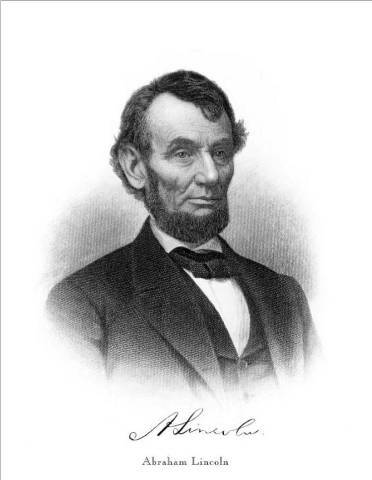
John M. Carson, Sr. and Abraham Lincoln

Yes, I couldn't believe it either, but there was the proof waiting to be found on the Library of Congresses website - John Miller Carson, Sr. had cooresponded with the Honorable Abe Lincoln the year prior to Lincoln becoming President.  Of course, that may not be a big feat, but why did Lincoln ever hold on to the letter so that we may read it today?  That answer may come after a bit more research.


A little information..................It's 1860 and Lincoln is running for President of the United States.  John Carson,a newspaper reporter living in Philadelphia, wants to see Lincoln elected to office.  This sets a plan into motion.  Carson believes that he can aid Lincoln in winning the election by persuading his readers to send votes Lincoln's way (approxiametly 150 to 200.)  Of course, this doesn't come without a price.  Carson propositions Lincoln, if elected, that he shall assign Carson a position in "the Custom House, Post Office, or some other department of executive control."   Pretty gutsy for a 24 year old! 

Follow this link to read the entire 4 page letter.
http://memory.loc.gov/cgi-bin/ampage?collId=mal&fileName=mal1/033/0334000/malpage.db&recNum=0

In The Collected Works of Abraham Lincoln, Volume 4 by Abraham Lincoln (link below) Lincoln

http://books.google.com/books?id=N2Pcq66OtW4C&lpg=PA39&ots=iLxo0s3lzQ&dq=John%20M.%20Carson%20post%20office&pg=PA39#v=onepage&q=&f=false

The following link will take you to a page from The Washington Times (May 27, 1905) that has an article and photo featuring John M. Carson, Sr. (about age 67)

http://chroniclingamerica.loc.gov/lccn/sn84026749/1905-05-27/ed-1/seq-4/

John Miller Carson Sr.  did go on to work for the goverment and presidents such as McKinley and Theodore Roosevelt.  He twice served as President of the Gridiron Club, nicknamed the "Father of the Gridiron Club" and credited with naming the club. 
From "Society in Washington: ITS NOTED MEN, ACCOMPLISHED WOMEN, ESTABLISHED CUSTOMS, and NOTABLE EVENTS," BY RANDOLPH KEIM, AUG 3 1887, Washington, D. C.
p. 212 SOCIETY IN WASHINGTON.

"John M. Carson, of the Philadelphia Ledger, began his career as a local reporter on Forney's Pennsylvanian, entered the Twenty-seventh Pennsylvania volunteers in 1861 as lieutenant, and rose to captain. After the war he resumed journalism, in 1873, coming to Washington as editor of the National Republican, A year later he became assistant, and soon after chief of the New York Times bureau, which he resigned in 1884, retaining his connection with the Ledger."  He was also a news coorespondent for the Philadelphia Public Ledger.  He became the chief of the Washington Post bureau and then delved into politics being elected as the Chief of the Bureau of Manufacturings of the American Department of Commerce and Labor in 1905 under President T. Roosevelt.  He earned $4,000 for this job.
JM Carson, Sr. passed in 1912, his wife in 1932.  John Miller Carson Sr. and his wife Anna Lavinia Miller Carson are buried in Arlington National Cemetery."

Researching Civil War Pension Files in Washington DC

This is my favorite genealogy research:
Retrieving The Pension File


I have been to Washington DC many times for pension records. It's very easy to do although it sounds like a lot of work. Here are my tips for what they're worth.


1. If you can go and would need to stay over because of travel distance try finding a hotel deal on travelzoo.com There are always good deals for DC. http://www.travelzoo.com/

2. You can drive in and park, but there really is no street parking post 911. You can park at Union Station and then use the Metro or park outside the city off 295 at one of the Metro stations and use the Metro system - it's wonderful. Just make sure that you check their website for all of their current information. Of course there are many parking lots available, but less in the archives area. http://www.wmata.com/

3. Make sure to read the information on the National Archives website as it relates to genealogy research. They are very strict as to what you can take into the research room.  http://www.archives.gov/dc-metro/washington/

4. Plan on spending, at the minimum, a few hours to research because after you request a record it will take an hour to pull. You can leave and come back.  No records are pulled on Saturdays.

5. When you arrive at the archives you will go through metal detectors, you will sign in and be given a researchers badge.

6. There are lockers for your things. The lockers cost a quarter, but the quarter is returned after you remove your things.

7. You will need a researcher's card. This is a photo ID card that gives you access to the research room. This takes a little extra time to get, but not a big deal. It is good for 1 year.

8. There is access to ancestry.com and Fold3 within the facility. Also many other resources are available while there (check their website for a complete listing.)

9. There are always helpful staff available to answer questions.

10. Once you have your ID you can put in your request for files. I think there is a limit of 4 per pull (check their website) The pulls are approximately once an hour except around lunch time.

11. You will want to make copies. There is a cashier who can take care of loading a swipe card that you will use for the machine. I think copies are about 15-25 cents each. Some of the files are large, so be prepared. Also take note as to the hours the cashier is available. You don't want to get caught without copy money.

12. When it's time to view your record you go to the research room, be sure you know what you can and can't take in.  They have scrap paper and pencils for you to use.

13. Once in the research room you will go to the desk and ask for your file. You will receive one at a time. This is where the real fun begins.

14. Go through the file carefully. If it’s an invalid file there will most likely be information from a doctor regarding the injury of the pensioner. There will be family information regarding children's names and birth dates, marriage information, etc. If it's a widow's pension you will find the same information, but there are usually court documents in which the widow had to get witnesses to prove that she and the soldier were married and that she has not remarried since his death. Widows would have relatives, neighbors, and friends testify. There can also be letters from the soldier included, but I have only seen these in a mother's pension file. You just never know what you'll find. I have found original death certificates and marriage certificates as well.

15. If possible have someone else make copies for you so you can go through the file and get the copies done quickly so you don't hold up a machine. My husband always makes my copies. On that note - be sure to double check what you've copied since this trip may not happen again.

16. Collect your things and have them checked before leaving the research room.

17. You can head back down stairs and enjoy the day.

18. Enjoy DC it's an amazing city and there are many things to do for free. The archives are only a block off the National Mall and a few blocks from the White House. It's fairly centrally located to all the major attractions. If you have good walking shoes don't worry about using the Metro.


As a side note - there is a cafe in the National Archives building where you can relax and grab a bite to eat or a caffeine fix.

Also bring a good city map. It's an easy city to get around.  I would also recommend the DAR library for genealogy research while in the city.  They have a great amount of family history books in their library.


I hope this is helpful. It is very worth seeing and touching these file for yourself. Yes, you can have someone else do this for you, but the archives employees do not know what you know and may not copy every piece of paper necessary to your research. If at all possible, go to DC yourself.


Sunday, March 4, 2012

Karl (Charles) M. Ried's German Origins

Karl M. Ried  (1827-1862) from Germany to the States

We already know that Karl Ried is the father of Matthias Ried of Conshohocken, Pa., but what we haven't learned yet are his origins.

Karl M. Ried was born in Langen, Steinbach am Durlach, Baden, Germany August 7, 1827.  He was the son of Matheus Ried born June 25, 1797 and Magdalena Denninger born November 6, 1798 both of Langensteinbach, Baden, Germany.  Today this is Baden-Wuerttemberg, Germany


A Church in Langensteinbach, Baden

Matheus Ried, born June 25, 1797, was the son of Friederich Ried and Elisabetha Raulch (birth dates unknown at this time.)  Magdalena Denninger born November 6, 1798 was the daughter of Adam Friedrich Denninger and Maria Catharina Knab (birth dates unknown at this time.)  You'll notice that many of the family names such as Matthias, Charles Matthias, Wilhelmina, Magdalena, and Friedrich repeat throughout the Ried family generations.

Karl M. Ried's Siblings

Parents, Matheus Ried (b.1797) and Magdalena Denninger (b.1798) had several children all born and christened in Langensteinbach, Baden, Germany.

Their known children are:
Magdalena b. 1817
Elisabetha b. 1819
Katharina b. 1821
Margaretha b. 1824
Karl  M. b. 1827 (more below)
Anna Maria b. 1830
Juliana b. 1833
Jakob b. 1838

Karl (Charles) M. Ried's Children (The Lumberton, NJ Family)

Karl M. Ried and Wilhelmina Bischoff had five children.  After the civil war battle death of Karl, Wilhelmina raised them on her own.  While alive, Karl was a shoemaker.  Some of his sons continued the family business owning their own shoe manufacturing company in Lumberton, NJ.  Following Karl's death, Wilhelmina received a widow's pension from the government.  She seems to have always lived in her own home with the exception of her last years.

Children of Karl (Charles) M. Ried and Wilhelmina Bischoff are:

1. Edmund Friedrich Ried   b. 1851
2. Henry William Ried         b. 1853
3. Matthias Ried                 b. 1855
4. Wilhelmina Ried              b. 1857
5. Charles M.                     b. 1860

More on the siblings

1. Edmund Friedrich Ried (1851-1898), first child of Karl M. and Wilhelmina Ried, married Anna Maria Karge and the couple had 8 children.  This family lived in the Lumberton/Mt. Holly, NJ area.

From The Genealogical and Memorial History of the State of New Jersey (Volume 6) by Francis Bazley Lee at www.ebooksread.com/authors-eng/francis-bazley-lee.shtml
"Edward F., eldest son and child of Charles and Wilhelmina (Bischoff) Ried, was born in Lumberton, New Jersey, May 17, 1851. and died there in 1898. After leaving school he learned the trade of shoemaking and became a practical workman of the days when shoes were made by hand instead of with machines and other modern mechanical appliances. In 1879 he became partner in the firm of F. E. Shinn & Co., manufacturers of shoes, and so continued for two years, when the Lumberton Shoe Company was incorporated and succeeded to the business formerly carried on by the firm of which he was a member. Mr. Ried was a director of the company and actively connected with the operation of its factory for one year, and at the end of that time he established himself in the same line of business under the style of E. F. Ried & Co., continuing the manufacture of shoes until the time of his death. Mr. Ried was an energetic, capable and straightforward business man and his efforts in life were rewarded with gratifying success. A firm Democrat, he served in various capacities, such as township clerk, school trustee, postmaster under President Cleveland's administration, and other offices. He was a member and trustee of the Lutheran church, member of the Junior Order of American Mechanics and also of Mt. Holly Lodge, No. 14, Free and Accepted Masons. In 1872 he married Anna M. Karge, who was born in 1852 and by whom he had eight children:

1. George Frederick, born November 17, 1874.
2. Edward, born October 23, 1876, engaged in business with his elder brother; married Irene Elder, of Lumberton, and has one daughter, Irene Elder Ried.
3. Philip, born March, 1878, merchant of Lumberton: married Sarah A. Amish, of Lumberton, and has one son, Kenneth F. Ried.
4. Anna AL, born 1881, married William J. Oatman, and has two children, Gladys R. and Edward E.      Oatman.
5. Caleb R., born 1884, died 1905; married Anna M. Cobb.
6. Johnson H., born December 26, 1886, lives in Lumberton.
7. Lillian, born May, 1889.
8. Francis W., born 1892."

2. William Henry Ried (1853-1920), second born son of Karl (Charles) M. and Wilhelmina Ried was a doctor or earned a doctorate degree.  His tombstone reads Dr. Henry William Ried (see below)


On one of the census he's listed as Wm H. Ried.

He married Pauline Moser and the couple had four children:
J. Percival, Edward F., Charles, and William Heinrich

I'm still in search of information regarding his doctorate.

3. Matthias Ried (1855-1906) married Mary Ann Little, daughter of Charles W. and Sarah Ann Little.  The couple had 10 children, two are unknown at this time, the others are:
Lillian May, Charles M., Wilhelmina, Mattie, Effie Mabel, Robert Raymond, Florence V., and Almira W.
It is unknown why he was the only sibling to move so far from his family.  I suspect that he met his wife who was born in Philadelphia and then the couple settled in an area where he could start his own barber shop.  Of interest to me is that my King family lived in West Conshohocken and very close to the Rieds in the same time period.  It is most likely that the Kings would have visited the Ried's barber shop.

4. Wilhelmina Ried (1857-1909) married Rev. Johnson Oatman, Jr.  Johnson Oatman was a Reverend, and a singer composer.  Wilhelmina Ried and Johnson Oatman had four children, Charles Percival, Miriam E., Rachel M., and Bertha Cline. 

Online I found this information regarding Johnson Oatman, Jr.

"Johnson Oatman, Jr., son of Johnson and Each el Ann Oatman(sic Rachel), was born near Medford, N. J., April 21, 1856. His father was an excellent singer, and it always delighted the son to sit by his side and hear him sing the songs of the church.

Outside of the usual time spent in the public schools, Mr. Oatman received his education at Herbert's Academy, Princetown, N. J., and the New Jersey Collegiate Institute, Bordentown, N. J. At the age of nineteen he joined the M.E. Church, and a few years later he was granted a license to preach the Gospel, and still later he was regularly ordained by Bishop Merrill. However, Mr. Oatman only serves as a local preacher. "

From http://mudcat.org/thread.cfm?threadid=132328

"This song "Count your Blessings" has long been a well-loved thanksgiving song. Edwin Excell composed the tune for the poem/lyrics written by Johnson Oatman, Jr.

American Hymn-writer Johnson Oatman, Jr.

Rev. Johnson Oatman, Jr. (born in 1856 near Medford, NJ, was an important and prolific Gospel songwriter of the late 19th C. and early 20th C. His father, Johnson Oatman Sr,, was a talented singer and familiarized his son with many church hymns. The younger Oatman joined the Methodist Church at age 19 and years later was ordained to preach in local Methodist congregations. Though primary career was in marketing and business administration, he wrote the lyrics to over 5,000 hymns."


Rev. Johnson Oatman Jr.

On the Internet I found this information regarding their daughter Miriam E.
From www.carpenterpitkin.com/familyrecords/d80.htm


"Dr. Miriam Eulalie Oatman died. Daughter of Johnson Oatman and Wilhelmina Ried. Author and research worker in Political Science and comprehensive government and administration. Member of the National Woman's Party, League for Individual Political Action, co-director, New Mexico "Little Hoover Community" 1951-1952 (Jim and Daphne Holden notes) She was married to Frederick Frank Blachly on 29 Nov 1914 in Lumberton children Frederick Johnson Oatman Blachly, Charles Howard Blachly, and Rachel Ann (Daphne) Blachly."

From http://www.hymnary.org/person/Oatman_ME1

"Miriam Oatman was the daughter of Joseph Oatman, Jr. and married Frederick F. Blachly. She was a political scientist and served on the Brookings Institution from 1925 to 1933 and taught political science and economics at the American University Graduate School in the 1930’s, and 1940’s. She also wrote over three hundred hymns and composed the music to several of her father's hymns. "How the Fire Fell" is perhaps the most widely known."


Published "The government and administration of Germany." By Frederick F. Blachly and Miriam E. Oatman. Baltimore: Johns Hopkins Press. 1928. Pp. xiv, 770
"The Government of Oklahoma." By Frederick F. Blachly and Miriam E. Oatman. Oklahoma City: Harlow Publishing Company, 1924. 678 pp.

5. Charles M. Ried (1860-pre 1895) married Anna B. Sommerville.  The couple had 3 children. 
Charles Matthias, Eugene W., and Andreas.  Anna remarried Anthony Hurschler and spent most of her life linging in Trenton, NJ.  Anna and Anthony had a child Jacob Gettler Hurschler.

That concludes this blog.  Soon to come - Information regarding Wilhelmina Bischoff Ried's nativity and Lumberton relatives.


Tuesday, February 28, 2012

Ried Family Origins

After searching for Matthias Ried's parents for years,
finally a breakthrough!

The clue that lead to this discovery was two Philadelphia death certificates for two of Matthias and Mary A. (Little)Ried's children.  Those children, Carles M. and Mattie Ried, are buried in the St. Paul's Evangelical Lutheran Church Cemetery in Hainesport, Burlington Co., NJ. The church was established in 1867.

                                  Below is a photo of Charles M. Ried's (1881-1882) tombstone.

The stone has fallen over and is hard to read, but it reads
Charles M.
Son of Matthias and Mary A. Ried
Born March 26 1881
Died March 20 1882
The passage below is not legible

From the Mt. Holly Herald published March 25 1882
"March 20th in West Conshohocken, Pa., Charles M., only son of Matthias and Mary A. Ried aged 11 months and 23 days.  Interred at Lumberton" 

There is another stone close to this one that could be for Mattie Ried, but it is not legible.  The church's records are on ancestry.com where you can see the actual pages as they were recorded in German.  I have searched about 52 pages of the 949 page ledger.  More research is needed.

The owner of the cemetery plot appears to be Wilhelmina (Bischoff) Ried, Matthias' mother.  Further research showed Matthias' father to be Karl (Charles) M. Ried, a victim of the civil war.  Charles M. Ried was killed 27 June 1862 during "the seven days fight" before Richmond, Va.  Charles was 34 years old with 5 children at the time of his death.  He served in Co. H 3rd NJ Infantry.  In a few weeks I'll travel to Washington, DC to the National Archives and take a look at Wilhelmina's widow's pension file.  More information will be gained from that collection of documents.

The following website link will lead you to letters written by Karl (Charles) M. Ried while serving our country during the civil war. Thanks to the Historical Society of NJ and two of Karl (Charles) Ried's granddaughters (Miriam E. Oatman and Rachel A. Oatman Kallen) for donating the letters in the 1960s.
Charles Ried (1827-1862) Papers

The Ried Family is long rooted in the Lumberton
and Burlington Co., NJ area

The 1860 Lumberton, Burlington Co., NJ census lists
Charles READ 33y Shoemaker born in Baden
Wilamina READ 34y born in Baden
Edmond READ 9y born in NJ
Wm H READ 7y born in NJ
Mathias READ 5y born in NJ
Wilamina READ 3y born in NJ

As an adult Matthias Ried (of Conshohocken, Pa.) always lists himself as being born in Ohio.  I have never seen proof of this anywhere.  It is possible that his mother could have traveled to Ohio while pregnant, but further research is needed to substantiate his claim. Follow up note: After acquiring Wilhelmina's widow's pension records I can say that Matthias was born in Ohio as per the reports on the census records.

Karl M. Ried (progenitor) came to America sometime before 1848.  He was naturalized in Philadelphia November 9, 1849 (ancestry.com) and married Wilhelmina Bischoff in the German Lutheran Church in Philadelphia October 7, 1850 ("New Jersey Historical Society Library," Manuscript Collection Manuscript Group #582 Charles Ried Papers (1827-62).

The couple has not been traced in the years between 1850 and 1860, but they appear to be living in NJ by 1851 when their first child, Edmund Friedrich, is born.  I have a feeling that Wilhelmina (Bischoff) Ried had family in the Burlington County area because there are many Bischoffs buried in the St. Pauls's cemetery in Hainesport, NJ.  More to come on the Bischoff Family.

1870 Lumberton, Burlington Co., census lists
Whilamina READ 40y born in Baden
Edmond READ 19y born in NJ works in a shoe factory
Whilamina READ 12y born in NJ attending school
Charles READ 10y born in NJ attending school

I'm not able to locate Wilhelmina in the 1880 census

The 1885 Lumberton, Burlington Co., NJ census lists
Wilhelmina Ried 20 to 60y age class
resident of Lumberton Female

I'm not able to locate Wilhelmina in the 1900 census

Wilhelmina died Feb 22 1903 at the age of 77 years old.
Her death is recorded in German in the records of St. Paul's church.

Her name is not legible on her tombstone, but her birth and death dates are


Wilhelmina Ried
Born March 25 1826
Died February 22 1903

Published in the Mount Holly Herald
"Feb. 22nd at Riverside Wilhelmina Ried age 77 years.  Interred at Hainesport."

Matthias Ried of West Conshohocken, Pennsylvania

I have seen Matthias Ried's (of West Conshohocken, Pa.) name in St. Paul's church records between January 1871 and 1873.  I will search the records further; however, on the 1900 census it's recorded that he and Mary A. (Little) Ried were married for 25years which would put their marriage at about 1875.  He may have been living in Philadelphia after 1873.  I can not find him on the 1870 census, but I think he was probably apprenticing with a barber due to the fact that he became a barber and would have needed to learn his skill from someone in the business.  In 1870, his brother, William Henry Ried, is working as a servant at the home of a physician. Later William becomes a physician.

The first record of Matthias Ried and family is on the 1880 West Conshohocken, Montgomery Co., Pa. census
Mathew REED 25y barber born in Ohio parents born in Baden
Mary REED 24y wife born in Pa.
Lilly REED 3y daughter born in Pa.
Minie REED 1y daughter born in Pa.
 
1900 West Conshohocken, Montgomery Co., Pa. census lists
Living on Josephine Avenue
Matthias REID 44y b. Aug 1855 44y  married 25y born in Ohio parents born in Germany occup: barber
Mary 43y b. Oct 1854 had 10 children/6 living born in Pa. parents born in Pa.
Lillie 23y  occup: Mender Mill
Minnie 21y occup: __?___Mill
Effie 13y at school
Robert 11y at school
Florence 8y at school
Almira 7y at school
 
Matthias died before the next census on July 29, 1906 at Anglesea, NJ.
His obituary was published on line at ancestry.com by a Little family member.


1910 West Conshohocken, Montgomery Co., Pa. census lists
Living on Josephine Avenue

Mary A. REED 55y widowed  born in Pa
Robert REED 21y son born in Pa occup: Barber
Flora REED 18 y daughter born in Pa occup: (can't read it)
 
1920 Conshohocken Montgomery Co., Pa. census lists
R Robert RIED 31y  b. Pa father b. Ohio mother b. Pa. married occup: Barber
C Anna RIED 29y wife
C Robert RIED 7y son
A Ruth RIED 6y daughter
L Mary RIED 65y mother
R Florence Shillady 27y sister

1930 Norristown, Montgomery Co., Pa census lists
Andrew KINSELLA 45y born in Pa parents born in Pa.
Florence KINSELLA 38y born in Pa father b. Ohio mother b. Pa
Mary RIED 75y widowed born in Pa  parents born in Pa

I have not come across Mary Ried's death date, but will visit the cemetery where she is buried soon.

Please follow the next blog posting
for a continuation of the story and  
Karl (Charles) M. Ried's German roots


Thursday, July 1, 2010

George Blanchflower Hunt, the immigrant

I was very excited and busy after I found an online listing for the christening of George Blanchflower Hunt.  Not knowing where the Hunts originated from in England I didn't think the genealogy trail would go any farther than Philadelphia, Pa.

Thanks, once again to the The Church of Latter Day Saints (http://www.labs.familysearch.org/ and http://www.familysearch.org/,) I am able to now trace the roots of George Blanchflower Hunt and his family back to England and into the 1600s. Please keep in mind that the following information is based on online research and that more information is needed to be certain that all of the families are connected properly.

On to the good stuff!
Let's start in Saham Toney, Norfolkshire, England, the birth place of George Blanchflower Hunt.

From http://www.wikipedia.com/
Saham Toney is a village and a civil parish in the English county of Norfolk. The village is 14.5 miles (23.3 km) North of Thetford, 27.3 miles (43.9 km) west of Norwich and 101 miles (163 km) north-east of London. The village lies 13.1 miles (21.1 km) west of the town of Attleborough.The nearest railway station is at Attleborough for the Breckland Line which runs between Cambridge and Norwich. The nearest airport is Norwich International Airport. The civil parish has an area of 16.51 km2 (6.37 sq mi) and in 2001 had a population of 1565 in 680 households. For the purposes of local government, the parish falls within the district of Breckland.


St. George's Parish Church
in Saham Toney

From the parish register (and available online) of Saham Toney, I found the christening record for George Blanchflower Hunt, the immigrant.  The record lists Hunt, George Blanchflower son of Robert Hunt and Frances Blanchflower christened 14 August 1810.  After further research I was able to locate George's siblings. 

Children of Robert Hunt and Frances Blanchflower:
1. George Blanchflower Hunt (above)
2. Robert Graves Hunt christened at Saham Toney 16 May 1812
3. William Hunt christened at Saham Toney 4 June 1814
4. Susan Hunt christened at Saham Toney 1 Oct 1819 (burial record for Susan Hunt 4 years old 24 May
    1822 st Saham Toney)

George Blanchflower Hunt married Jane Muffett (born about 1811) on 13 Apr 1830 in Swaffham, Norfolk, England witnesses are listed as Jane Muffett and John Muffett.  The couple sailed for New York on the Ship Hannibal June 10th of that same year.  They then settled in Philadelphia, Pa.

A quick refresher on George and Jane Hunt's children:
1. Charles M. Hunt b. 1831
2. Susanna Francis Hunt b. 1840
3. William F. Hunt b. 1835
4. John P. Hunt b. about 1840
5. Mary Jane Hunt b. about 1842 (also called Jane)
6. Charlotte Hunt b. abt 1846
7. Caroline Hunt b. abt 1848
8. Georgiann Hunt b. abt 1854

Back to England............

I'm not able to track George's father Robert's family yet.  There are numerous Hunts in England.  I did locate the marriage record for Robert Hunt and Frances Blanchflower.  The couple was married 10 Oct 1809 at Saham Toney.

Parents of Frances Blanchflower are George Blanchflower and Frances Sparrow (married 7 Dec 1773 at Saham Toney.)

Children of George Blanchflower and Frances Sparrow are:
1. Mary Blanchflower christened 16 Apr 1775 at Saham Toney
2. Frances Blanchflower (wife of Robert Hunt) christened 16 Aug 1778 at Saham Toney
3. George Blanchflower christened 9 Feb 1777 
4. Elizabeth Blanchflower christened 31 March 1782
5. John Blanchflower christened 9 Dec 1787

Parents of Frances Sparrow (christened 8 Jul 1749 at Saham Toney) appear to be Samuel Sparrow and Frances Hoddy.

Parents of George Blanchflower (father of Frances Blanchflower) are Abraham Blanchflower and Esther Layt.  Abraham and Esther were married in Ovington, Norfolk, England 11 Mar 1743.  George Blanchflower was christened at Ovington 17 May 1747.

Parents of Abraham Blanchflower (born about 1704 in Shipdam, Eng.) are Thomas Blanchflower and Elizabeth Hill

Hopefully soon, I will have more Hunt genealogy that takes us beyond Robert Hunt! 

Saturday, May 15, 2010

William P. Saxton: A Philadelphia Hatter and His Kin

William P. Saxton (Grandfather to John A. Saxton)
was born about 1800 in Pennsylvania.  His wife was Elizabeth or Ann or Elizabeth Ann.  On the 1860 census she's listed as Ann and on the 1850 census it's Elizabeth.  The couple was most likely married about 1839 in Pa..

1840 census lists a William Sexton, Northern Liberties Phila., Pa. 1 male and 1 female between 20-30yrs. of age and 1 female under the age of 5.

1850 census 6th Ward of Kensington, Phila., Pa.
Wm. Saxton 42 yrs., occupation Hatter, born in Pa.
Elizabeth  33 yrs born in Pa.
(all children born in Pa.)
Ann E. 11 yrs
Alfred 9 yrs.
Oliver 7 yrs.
Harriet 5 yrs
Mary 1 yr.

1860 census 19th Ward Kensington Phila., Pa.
William P. Saxton 55 yurs occupation Hatter born Philadelphia
Ann 40 yrs. born Philadelphia
(all children listed as born in Phila.)
Alfred 19 yrs.
Oliver 16 yrs.
Harriet 14 yrs.
Mary 11 yrs.
William 3 yrs.

I have not been able to locate the family on the 1870 census as of yet.

1880 census 17th Ward, Philadelphia, Hancock Street
William Saxton, Father, 74 yrs. occupation Hatter born Pa., parents born in Pa. Widowed
Annie E. (Williams) daughter 41 yrs born Pa. Widowed
Annie M. (Williams) granddaughter 17yrs

William Saxton died 31 Aug 1887 Philadelphia at the age of 87 yrs.  He is buried at North Cedar Hill Cemetery in Phila.  I don't have the death or buiral information for his wife except that she died prior to William. 


North Cedar Hill Cemetery, Philadelphia, Pa.
Gravestone that marks the resting place of
William Saxton (abt. 1800-1887)
Annie E. Williams (1838-1908)
Daughter of William and Elizabeth Saxton
Benjamin Williams (1835-1880)
Husband of Annie E. Saxton
Howard L. Williams (abt. 1865-1933)
Annie May Harrigan (1863-1913)
Daughter of Benjamin and Annie Williams
Annie M. Harrigan (Still Born 1887)
John M. Harrigan (1859-1931)
Husband of Annie May Williams
Annie E. Harrigan (May-Sept 1889)


William Saxton's son Alfred was the father of John A. Saxton
Alfred Saxton Family

1870 census 2nd Ward Phila.
Alfred Saxton, 28 yrs, Hatter born Pa.
Annie 25 yrs, born Pa
John 4 yrs born NY
Mary 2 yrs born Pa.
Annie 7 months born Pa in November

1880 census 31st Ward Albert St.
Alfred Saxton 39 yrs, Hatter, born in Pa., parents born in Pa. Unemployed for 3 months of that year.
Annie 35 yrs. Keeping House has Debility, born in Pa., Parents born in Ireland
John R. ( this is actually John A.) 14 yrs born NY
Mary 12 yrs
Harriet 7 yrs
Annie E. 5 yrs

1890 Philadelphia City Directory (McElroy's)
Alfred Saxton Hatter home 3159 Mercer
John R. Saxton Driver 3159 Mercer

1900 Ward 25 Rush St. Phila., Pa.
Alfred Saxton born Nov 1840, 59 yrs, born Pa., Hatter, rents property
Anna wife born Oct 1844 55 yrs born Pa.
Alfred son born Sept 1882 18 yrs single occupation laborer
William son born Jun 1888 12 yrs single at school

1910 census Ward 25 Philadelphia
Alfred Saxton Sr. 69 yrs. married 45 yrs. born Pa, retired has his own income
Anna wife 65 yrs.  Had 7 children/5 living born Pa.
Alfred Jr. son 28 single born Pa,. occupation Driver of a wagon
William son 21 yrs single born Pa.occupation Boliermaker for the Railroad

Alfred and Anna died sometime between 1910 ans 1920.  I haven't found them on the 1920 census.

Back to William Saxton (grandfather of John A.) ...............
William's son Oliver was a soldier in the civil war Co. E 27th Pa. Infantry.  He filed for an invalid pension and the next time I can get to Washington DC. I'll look it up.  There is a civil war record for an Alfred Saxton who fought for NY, but was from Pa.  (40th NY Infantry.) This Alfred Saxton also filed for an invalid pension. Due to the fact that John A. Saxton was born in NY in 1866 and that this is the only connection to NY I can find for the family, I have a sneaking suspicion that this may be William's son/John A.'s father.  When I get a look at the pension file I'll know. 

More on Oliver............I found a record on Ancestry.com for Oliver being treated at a US National Home for Disabled Volunteer Soldiers in Dayton, Ohio.  The record lists Oliver Saxton born in Philadelphia, occupation Hatter, 31 yrs. old,  injury - gun shot wound of right thigh, injury received May 15, 1864, Reseca, Ga.  Oliver was in the home from June 22, 1874 through Aug 16, 1875.

There is an article posted online at http://www.delcohistory.org/ashmead/ashmead_pg285.htm
that tells of the death of Oliver Saxton.  The article is included in the book on Delaware County, Pa. History - Tinicum History.)

William's daughter Annie E. Saxton married Benjamin Williams.  Daughter Mary/May Saxton married a Mr. Haines.  Harriet died shortly after her father.  I don't have an exact date.

John A. Saton Family

1910 census Philadelphia
John Saxton 44 yrs born Brooklyn parents born Pa. Does odd jobs, rents home
Mary wife 37 yrs born Phila.
Mary daughter 3 yrs born Phila
Anna daughter 2 yrs. born Phila
John son 1 month born Phila.

1920 census Camden Garfield Ave.
John A. Saxton, owns home, 53 yrs, born NY, occupation laborer
Mary J. wife 47 yrs. arrived in this country 1889 was a naturalized citizen, born in Ireland
Mary A. daughter 13 yrs.
Annie daughter 11 yrs.
Francis son 7 yrs.

1930 census Camden
John Saxton  owns home, value of property $8,000.00, 64 yrs. old age 39yrs old at marriage, born NY parents b. Pa, occupation porter at a bank
Mary wife 57 yrs, 32yrs old at marriage born Ireland, parents born Ireland, Naturalized citizen
Mary daughter 23 yrs works for a department store
Anna daughter 21 yrs cashier at a restuarant
Frances  son 17 yrs Clerk at a garage
Patrick Kane boarder 20 yrs Helper at a garage

There will be more to follow on the Saxtons in my next posts.