Tuesday, March 4, 2014

How About Those Skeletons?

Unearthing Skeletons

Unearthing those skeletons is always interesting whether they are my own or those belonging to a client.  Aren't those skeleton's stories what make our family history come alive?  OK, maybe you disagree.  They tend to shake up our tree, make us ponder where did we really come from, and occasionally scare us. Well then, what should we do with those skeletons? Leave them buried? Pretend we never uncovered their secrets? Well, maybe we should celebrate them, OK maybe not the mass murderers, but those who just choose the wrong road when coming to the fork in it.

Recently, I was listening to (I believe) one of Lisa Louise Cooke's* podcasts where she addressed this issue. The advice offered by Lisa Louise was.....the living come first.  I'd have to agree.  Maybe after digging up juicy information about your long-lost-gun-slinging-bank-robbing-womanizing great-great uncle once removed, and knowing full well that Grandma would cringe at the thought of airing dirty laundry, it may not be sage advice to immediately run to the nearest computer to post this information for all to see.  Or if you find yourself immediately compelled to share, as we are all too ready to do in today's world -  leave out a few gory details for Grandma's sake.  We all want Grandma to be happy in her last years don't we? Of course we do!  Well then, how do we present this new found information without making Grandma want to write us out of her will?

How about trying this........

substituting desperado for bank robber - conjures up imagery of the famous Eagles song
substituting moonlighter for thief - no one will suspect the subject is not working a second job
substituting groggy for someone who drinks a little too much - indicates someone is very tired, maybe from working hard

OK you get the idea - there are many ways to gently discuss the habits of our skeletons without putting it all out there.  However, keep in mind when deciding whether you should post, discuss, or relay any questionable information ere on the side of caution.  Perhaps you can ask another friend or family member who wouldn't be greatly effected by the new information.  This accomplishes too things. One, allows you to relate your information and two, use the person as a sounding board to gauge their reaction and gain their opinion.

The choices we make can go along way......

A few years ago someone kindly offered to go to a library local to her to look up an obituary for me.  She was able to find the obituary and a story to go along with the obituary.  The reason for the story was that my third great grandfather had been killed after being hit by a train while walking along the railroad tracks.  He was 82 years old.  The woman did not tell me this information because she realized that it may upset me. Instead she sent me the paperwork and allowed me to read it for myself. After discovering this information she had a choice to make.  She could have emailed me immediately with all the gory details and risked upsetting me or she could have done the correct thing which was to gently allow me to discover the reason why my third great grandfather had passed.  I appreciated her thoughtfulness.  Just because we find information does not mean others will be as excited to know every last detail.

Embrace you skeletons....

Sometimes they're embarrassing, silly, uneducated, crazy, controversial, far-from-traditional, or down right nasty, but they are ours.  We did not create them and we are not responsible for them. So why should we feel they are a reflection on us?  Try to find some good in those skeletons and embrace them.  We would not be here if it weren't for them.

(*Lisa Louise Cooke's genealogy gems website is lisalouisecooke.com)

Sunday, February 9, 2014

Do you flipboard for genealogy???

One android app I have become attached to is my Flipboard app.  

If you're not familiar with flipboard. www.flipboard.com describes it as
 "a single place to discover, collect and share the news you care about.  Add your favorite social networks, publications and blogs to stay connected to the topics and people closest to you." 

I'm not a big fan of apps and don't have a lot of time to "play" with new technology, but this app is definitely for me and anyone who enjoys reading and learning about new sources of information.  I feel much more connected to the genealogy profession by reading the genealogy articles on my flipboard.  And this one is sooooo easy and useful.

Just choose the types of "magazine articles" you'd like to read about and flipboard pretty much does the rest.  After taking a few minutes to set it up you're ready to flip through the pages and pages and pages (you get the idea) of articles under your chosen topic.  My favorite time to use my flipboard app is on the weekends, in the morning when I'm still waking up.  I can image many times and places when accessing flipboard would be advantageous such as anytime you're wanting to read.  

I love flipboard for introducing me to many different genealogy avenues such as the many genealogy articles on about.com written by professional genealogist, Kimberly Powell,  and Eastman's Online Genealogy Newsletter written by Dick Eastman, a wonderful blog written by Eastman and full of everything genealogy and then there are the many articles with links to genealogy videos on youtube.  I'm convinced you can sit all day following link after link in these articles.  

So, the next time you're sitting around waiting for the doctor, DMV, or airplane, open up your flipboard app and learn something new.

Wednesday, January 29, 2014

Overwhelmed? To Say the Least!

I always find it calming and reassuring when I'm feeling overwhelmed or out of control to make a list or design a plan.  Boy, do I need a plan now.  I started reading the Professional Genealogist or more loving known as Progen.  It is basically a textbook with all 654 pages exploding with essential genealogical information.  Being a reference book geek, I can truly say I'm in love with it!  Who wouldn't want guidance, advice, resource lists, how-tos and how-not-tos at their disposal.  My only problem is the more I read (and I'm only on chapter 5) the more I want to do.  Well, you say that's a good thing.  I've been inspired to learn - never a bad thing especially since I'm an educator.  Yes, I guess it's a wonderful predicament, but I'm on overload so much that I've had a few sleepless nights.  One of those sleepless nights, 2:30AM to be exact, I was reading genealogy articles on my cell phone and learned about a Progen study group (progenstudy.org) available to those who want to learn more and be evaluated by our peers.  I was in, they had me at....this will help you with your certification portfolio, but it lasts for 19 months and I want to take the class at Boston U. in the spring and then apply for the certification and work full time - no time!
So now my new dilemma, how do I make more time.  If I could do that I could bottle it and sell it, but I don't think that's going to happen anytime soon.

I did sign up to attend an ancestry.com day at a local historical society.  I'm very excited to spend the day discussing the topic I'm most passionate about.  It should be a great day, but still six weeks away.  I guess for now, I'll keep delving into Progen, write notes on my sticky pads, and start figuring out where I should go next.


Wednesday, January 15, 2014

The Certification Journey Begins

Let me start this blog post by saying that I am not new to genealogy.  I have about twelve years or so experience in genealogical research.  I have never been paid to work for a genealogical client, although I would love to turn professional.  I have taught a couple small genealogy classes, basically helping seniors with where to locate resources.  I would love to teach a subject I am passionate about.  I have never attended a genealogical conference, but plan to do so as soon as the opportunity presents itself.

To the Heart of the Matter

Ok, So I've decided to take on a new and exciting challenge in the world of genealogy - becoming a certified professional genealogist!  I don't know if I'm more excited or scared out of my mind.  No matter which it is it's definitely overwhelming and intimidating.  I wanted to document my journey for reasons unknown, but I think having an outlet for my thoughts would some how help to keep them from letting in too much doubt as to whether I should take this on or not.  So here I go.................

Step one. I ordered a copy of Professional Genealogy by Elizabeth Shown Mills.  Everything I've read points me in this direction for a starting point.
Step two. I've started scouring the BGC (Board of Certified Genealogists) website for any and all help/suggestions I can find.
Step three.  Read the preliminary application and certification application
Step four. Watch the hour long "Measuring up Against the Standards" video and take notes.
Step fiveGather a list of journals and books from the suggested reading list on the BCG website.
Step six. Get nervous and second guess myself AGAIN!
Step seven. Go to BCG website and listen to the audio recordings of board certified genealogists explaining why they choose to become certified. Feel better about my decision!
Step eight. Go to the skill building page on the BCG website and start downloading the articles they've linked.
Step nine.  Read the articles and use my analysis skills to re-examine some of the documents I have photo copied (i.e. wills and deeds.)

On My Way

These nine steps will get me on my way.  I will be gaining  membership into the APG (Association of Professional Genealogists.) In April, I will be enrolling in the online Genealogical Research class Boston University is running.  Following completion of the class, I plan to start the year long portfolio process to gain a professional genealogical certification. Wish me good fortune!

Sunday, March 18, 2012

Matthias Ried on the Doomed Schooner Nora

Another mystery has been uncovered regarding the Ried family.  This one surrrounds the death of  Matthias of Conshohocken.  I have had his death date and obituary for a while now, but could never figure out why he had died in Anglesea NJ, now North Wildwood.  I surmized that he most likely died while on a day trip to the shore either from drowning or possibly a heart attack.  I never thought I'd find that he was a victim of one of the biggest tragedies of the day.

The day was July 29th 1906 and it began when Matthias took a train to the Jersey Shore for a Sunday of fishing.  This was a popular outting for men from the Philadelphia area.  However, on this Sunday he would have been better to stay in Conshohocken.  The crew and passengers (33 total) set out on a beautiful Sunday morning to a popular fishing spot off the coast.  About noon the weather began to change and the captain decided to bring the schooner in early.  At about one o'clock, the schooner traveled over Hereford  Bar, which was said to be unavoidable.
 
 
From the annual report of the United States Life-Saving Service

 "In the words of a survivor describing the accident, the sloop while passing over the bar " suddenly veered, swung around, wallowed for a moment in the trough of the sea, then turned completely over, snapping off her mast like a pipe stem."

At about 1:15PM, H. S. Ludlam, of Hereford Inlet Station was alerted to the wreck.  Within ten minutes he had a rescue boat in the water and was on the way to the wreck.  Along the way, he aided men who were swimming for shore.  Unfortunately, not all the men could be saved some being trapped beneath the Nora.  The rescue was also hampered by the rough seas.  Not long in the day after the tradegy of the Nora occured, another boat, the Alva B., was coming into shore on the same path and it too capsized, sadly another life was lost in that wreck.


Below is a postcard that was printed in rememberance of the tradegy of the Nora


The postcard reads:
"Beaching and turning the wreck of "Nora" Anglesea, N. J. (Capt Herbert Shivers) which was capsized by a heavy sea while crossing Hereford Bar on her way shoreward from the fishing banks Sunday July 29th, 1906.  She carried thirty-two passengers nine of whom were drowned, the remaining number being saved by the strenuous and heroic efforts of Capt S. H. Ludlam  of the U.S. Life Saving Station and his volunteer crew."
 The tradegy of July 29, 1906 was front page news in newspapers across the country.  And in a day where communication was not instantaneous, reporters claimed deaths of all different numbers and at least one even indicated that there were sharks at the scene.  Unfortunately, Matthias Ried's name was not listed among the dead in the stories I have seen.  There is an "unknown man" listed, I believe this is Matthias.  His name does appear in the account from the United States Life-Saving Service's annual report.  You can read the entire report at http://www.archive.org/stream/lifesavingservic98unitrich/lifesavingservic98unitrich_djvu.txt Once on the webpage just scroll down to the report from July 29, 1906.

I have a little more research to do on this tragedy and will follow up this post when more information is found.


Saturday, March 17, 2012

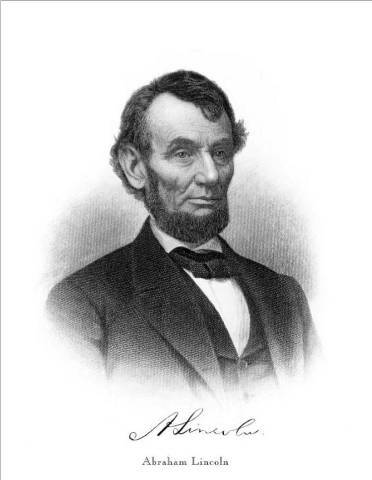
John M. Carson, Sr. and Abraham Lincoln

Yes, I couldn't believe it either, but there was the proof waiting to be found on the Library of Congresses website - John Miller Carson, Sr. had cooresponded with the Honorable Abe Lincoln the year prior to Lincoln becoming President.  Of course, that may not be a big feat, but why did Lincoln ever hold on to the letter so that we may read it today?  That answer may come after a bit more research.


A little information..................It's 1860 and Lincoln is running for President of the United States.  John Carson,a newspaper reporter living in Philadelphia, wants to see Lincoln elected to office.  This sets a plan into motion.  Carson believes that he can aid Lincoln in winning the election by persuading his readers to send votes Lincoln's way (approxiametly 150 to 200.)  Of course, this doesn't come without a price.  Carson propositions Lincoln, if elected, that he shall assign Carson a position in "the Custom House, Post Office, or some other department of executive control."   Pretty gutsy for a 24 year old! 

Follow this link to read the entire 4 page letter.
http://memory.loc.gov/cgi-bin/ampage?collId=mal&fileName=mal1/033/0334000/malpage.db&recNum=0

In The Collected Works of Abraham Lincoln, Volume 4 by Abraham Lincoln (link below) Lincoln

http://books.google.com/books?id=N2Pcq66OtW4C&lpg=PA39&ots=iLxo0s3lzQ&dq=John%20M.%20Carson%20post%20office&pg=PA39#v=onepage&q=&f=false

The following link will take you to a page from The Washington Times (May 27, 1905) that has an article and photo featuring John M. Carson, Sr. (about age 67)

http://chroniclingamerica.loc.gov/lccn/sn84026749/1905-05-27/ed-1/seq-4/

John Miller Carson Sr.  did go on to work for the goverment and presidents such as McKinley and Theodore Roosevelt.  He twice served as President of the Gridiron Club, nicknamed the "Father of the Gridiron Club" and credited with naming the club. 
From "Society in Washington: ITS NOTED MEN, ACCOMPLISHED WOMEN, ESTABLISHED CUSTOMS, and NOTABLE EVENTS," BY RANDOLPH KEIM, AUG 3 1887, Washington, D. C.
p. 212 SOCIETY IN WASHINGTON.

"John M. Carson, of the Philadelphia Ledger, began his career as a local reporter on Forney's Pennsylvanian, entered the Twenty-seventh Pennsylvania volunteers in 1861 as lieutenant, and rose to captain. After the war he resumed journalism, in 1873, coming to Washington as editor of the National Republican, A year later he became assistant, and soon after chief of the New York Times bureau, which he resigned in 1884, retaining his connection with the Ledger."  He was also a news coorespondent for the Philadelphia Public Ledger.  He became the chief of the Washington Post bureau and then delved into politics being elected as the Chief of the Bureau of Manufacturings of the American Department of Commerce and Labor in 1905 under President T. Roosevelt.  He earned $4,000 for this job.
JM Carson, Sr. passed in 1912, his wife in 1932.  John Miller Carson Sr. and his wife Anna Lavinia Miller Carson are buried in Arlington National Cemetery."

Researching Civil War Pension Files in Washington DC

This is my favorite genealogy research:
Retrieving The Pension File


I have been to Washington DC many times for pension records. It's very easy to do although it sounds like a lot of work. Here are my tips for what they're worth.


1. If you can go and would need to stay over because of travel distance try finding a hotel deal on travelzoo.com There are always good deals for DC. http://www.travelzoo.com/

2. You can drive in and park, but there really is no street parking post 911. You can park at Union Station and then use the Metro or park outside the city off 295 at one of the Metro stations and use the Metro system - it's wonderful. Just make sure that you check their website for all of their current information. Of course there are many parking lots available, but less in the archives area. http://www.wmata.com/

3. Make sure to read the information on the National Archives website as it relates to genealogy research. They are very strict as to what you can take into the research room.  http://www.archives.gov/dc-metro/washington/

4. Plan on spending, at the minimum, a few hours to research because after you request a record it will take an hour to pull. You can leave and come back.  No records are pulled on Saturdays.

5. When you arrive at the archives you will go through metal detectors, you will sign in and be given a researchers badge.

6. There are lockers for your things. The lockers cost a quarter, but the quarter is returned after you remove your things.

7. You will need a researcher's card. This is a photo ID card that gives you access to the research room. This takes a little extra time to get, but not a big deal. It is good for 1 year.

8. There is access to ancestry.com and Fold3 within the facility. Also many other resources are available while there (check their website for a complete listing.)

9. There are always helpful staff available to answer questions.

10. Once you have your ID you can put in your request for files. I think there is a limit of 4 per pull (check their website) The pulls are approximately once an hour except around lunch time.

11. You will want to make copies. There is a cashier who can take care of loading a swipe card that you will use for the machine. I think copies are about 15-25 cents each. Some of the files are large, so be prepared. Also take note as to the hours the cashier is available. You don't want to get caught without copy money.

12. When it's time to view your record you go to the research room, be sure you know what you can and can't take in.  They have scrap paper and pencils for you to use.

13. Once in the research room you will go to the desk and ask for your file. You will receive one at a time. This is where the real fun begins.

14. Go through the file carefully. If it’s an invalid file there will most likely be information from a doctor regarding the injury of the pensioner. There will be family information regarding children's names and birth dates, marriage information, etc. If it's a widow's pension you will find the same information, but there are usually court documents in which the widow had to get witnesses to prove that she and the soldier were married and that she has not remarried since his death. Widows would have relatives, neighbors, and friends testify. There can also be letters from the soldier included, but I have only seen these in a mother's pension file. You just never know what you'll find. I have found original death certificates and marriage certificates as well.

15. If possible have someone else make copies for you so you can go through the file and get the copies done quickly so you don't hold up a machine. My husband always makes my copies. On that note - be sure to double check what you've copied since this trip may not happen again.

16. Collect your things and have them checked before leaving the research room.

17. You can head back down stairs and enjoy the day.

18. Enjoy DC it's an amazing city and there are many things to do for free. The archives are only a block off the National Mall and a few blocks from the White House. It's fairly centrally located to all the major attractions. If you have good walking shoes don't worry about using the Metro.


As a side note - there is a cafe in the National Archives building where you can relax and grab a bite to eat or a caffeine fix.

Also bring a good city map. It's an easy city to get around.  I would also recommend the DAR library for genealogy research while in the city.  They have a great amount of family history books in their library.


I hope this is helpful. It is very worth seeing and touching these file for yourself. Yes, you can have someone else do this for you, but the archives employees do not know what you know and may not copy every piece of paper necessary to your research. If at all possible, go to DC yourself.